By Jenisha Jonchhe How we research Updated
There is no single inventor of the bra. The French corset maker Herminie Cadolle showed a corset cut into two pieces, with the top half supporting the bust, in 1889, and the American Mary Phelps Jacob patented a soft “backless brassiere” in 1914. Cup sizes followed in the early 1930s.
From corset to two pieces (1880s to 1900s)
For most of the 1800s, a corset shaped the whole torso. Cadolle’s design split it into a lower corset and an upper “bust support” with shoulder straps. The word brassière was in use in fashion magazines by the early 1900s.
The 1914 patent
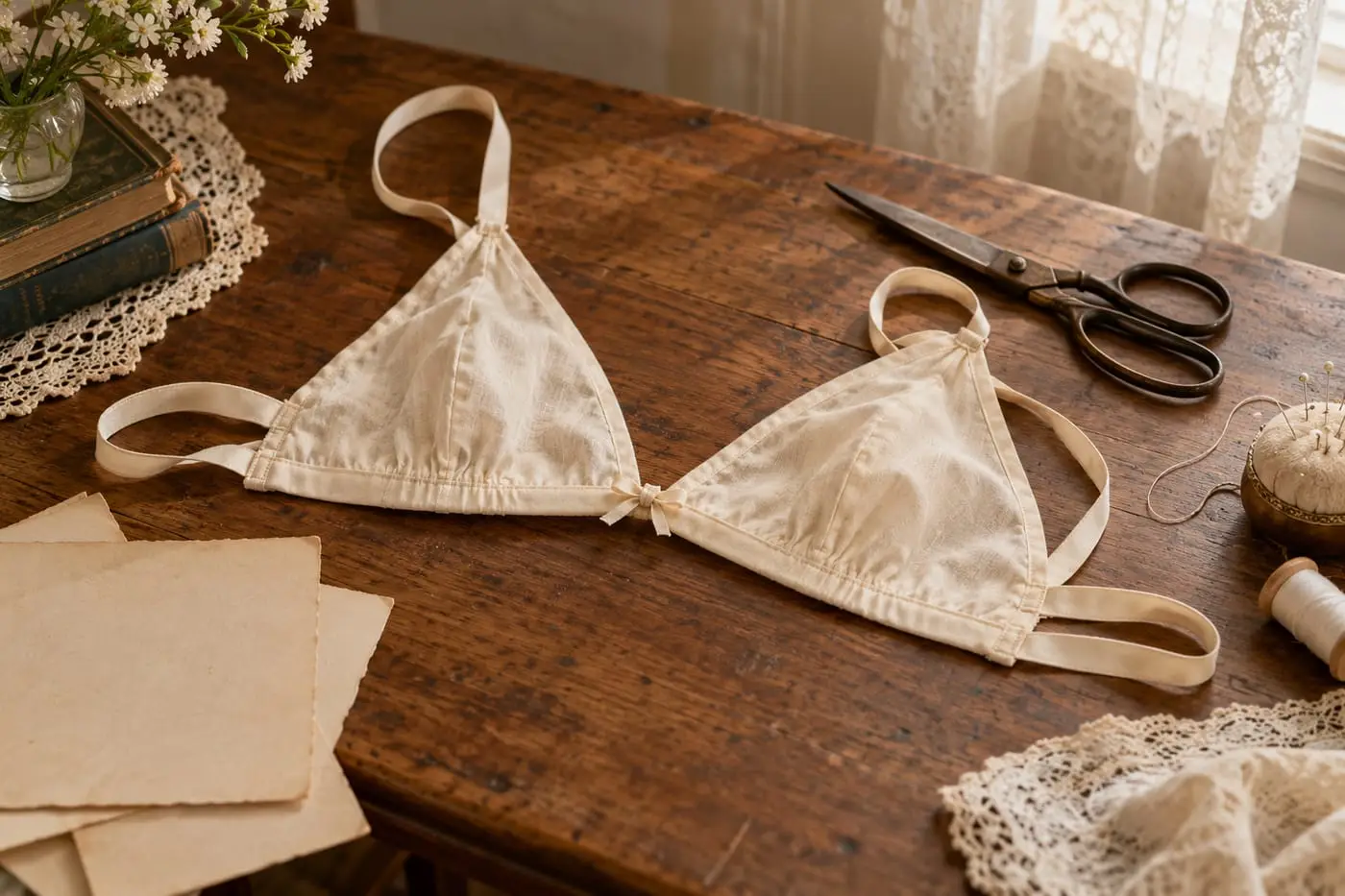
Mary Phelps Jacob, later known as Caresse Crosby, made a light bra from two handkerchiefs and ribbon to wear under a sheer evening dress. She patented the design in 1914 and later sold the patent to a corset company.
Cup sizes and underwire (1930s to 1950s)
- Cup letters arrived in the early 1930s, so bras could be sold by band and cup instead of one size.
- Adjustable bands with hooks and eyes became standard.
- Underwire and shaped cups grew popular after the Second World War, with the pointed “bullet” shapes of the 1950s.
The 1968 protest
Protesters at the 1968 Miss America pageant threw bras, girdles and high heels into a “freedom trash can”. They were not set on fire, but the phrase “bra burning” became shorthand for the women’s movement.
Today
Modern bras are sold in a much wider range of sizes, from small bands to K cups and beyond, with moulded, seamed and wire-free designs. The idea is unchanged since the 1930s: a firm band and cups that match your volume. Our UK bra size chart shows the cup order, and our bra styles guide explains what each shape does.
Questions people ask
When was the bra invented?
When did cup sizes start?
Did women really burn bras in 1968?
Written by
Jenisha Jonchhe
Jenisha Jonchhe is a New York-based fashion writer and designer with academic training in fashion design. She writes research-led bra sizing and fit guides for UK shoppers.
General information researched from brand and retailer fit guides. It is not medical advice: for pain, skin problems or changes in your breasts, speak to your GP or pharmacist. How we research